
Quick Answer
A technology roadmap helps architecture firms make informed IT decisions before they become urgent. Instead of reacting to hardware failures, cybersecurity incidents, or software compatibility issues, a roadmap aligns technology investments with business goals over the next three years. The result is better budgeting, improved productivity, stronger security, and fewer unexpected disruptions.
The Best Technology Decisions Are Rarely Made During an Emergency
A server fails.
A workstation stops working.
A ransomware attack makes the news.
A major software update forces hardware upgrades.
These situations often trigger technology purchases that were never planned.
When decisions are made under pressure, firms tend to spend more, evaluate fewer options, and focus on solving today's problem instead of preparing for tomorrow.
The firms that get the greatest value from technology rarely operate this way.
Instead, they plan ahead.
A technology roadmap transforms IT from a series of unexpected expenses into a predictable business investment.
Start with Your Business Goals, Not Your Hardware
Technology should support where your firm is going.
Before discussing servers, laptops, or cloud platforms, ask a few business questions.
- Will we hire additional staff?
- Are we planning to open another office?
- Will more employees work remotely?
- Are we taking on larger or more complex projects?
- Do we expect new compliance or cybersecurity requirements?
These business decisions shape your technology needs far more than individual hardware specifications.
Once your goals are clear, technology planning becomes much easier.
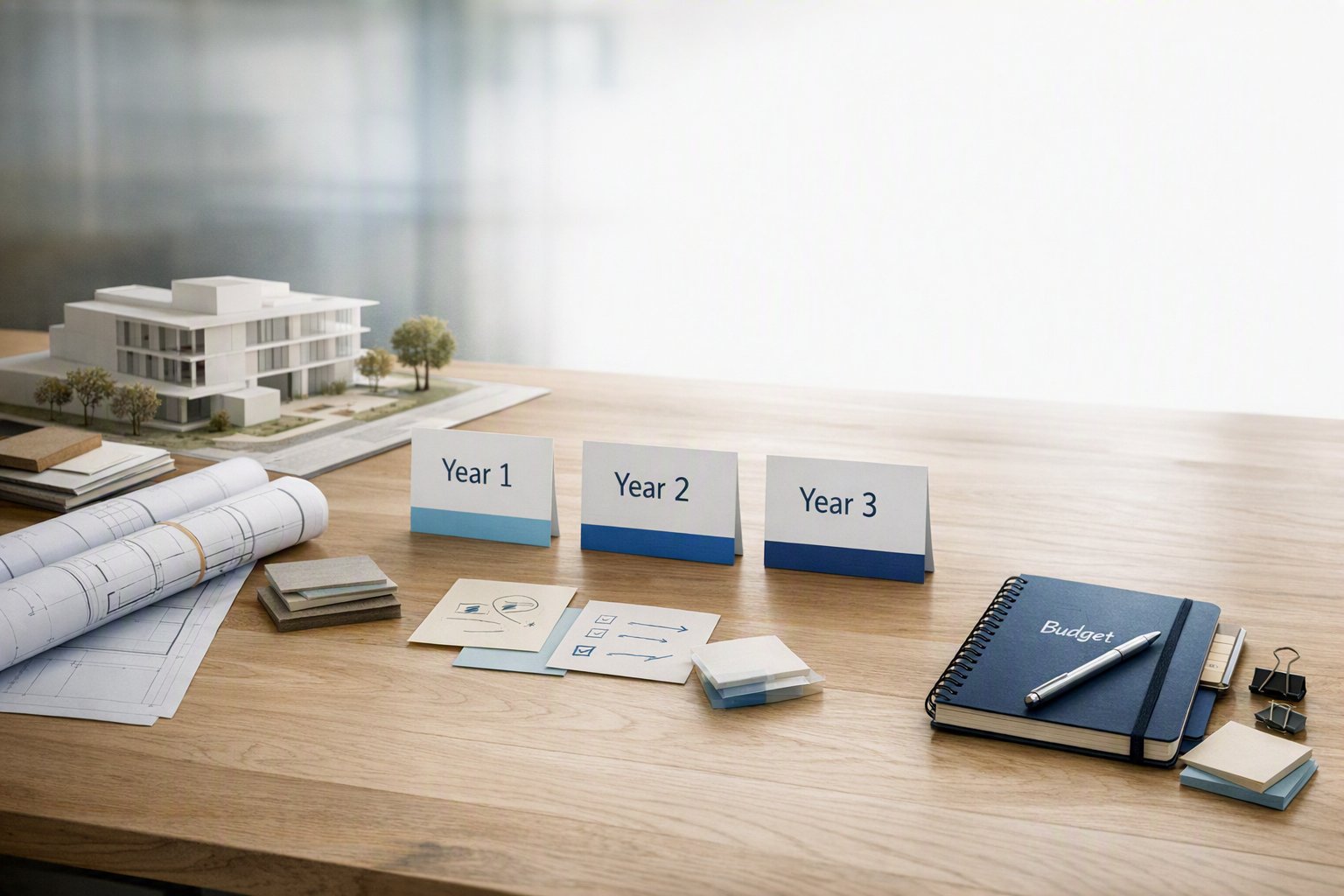
Think in Phases Instead of Projects
Many firms view technology as a collection of unrelated purchases.
A new firewall this year.
New workstations next year.
Microsoft 365 improvements sometime later.
A better approach is to organize investments into phases.
Year One: Strengthen the Foundation
Focus on the essentials.
Review cybersecurity.
Replace aging hardware.
Standardize workstations.
Improve backups.
Organize Microsoft 365.
Address recurring technology frustrations that affect employees every day.
Year Two: Improve Collaboration
Once the foundation is stable, improve the way people work together.
Examples include:
- Better document management
- Improved remote access
- Standardized Microsoft Teams workflows
- More efficient project collaboration
- Better mobile productivity
These investments often produce noticeable improvements without major infrastructure changes.
Year Three: Prepare for Growth
As the firm grows, technology should grow with it.
This may include:
- Expanding cloud services
- Supporting additional offices
- Strengthening cybersecurity
- Modernizing networking
- Planning hardware refresh cycles
- Evaluating emerging technologies that support design workflows
Planning several years ahead helps avoid last-minute decisions and spreads investments more evenly.
Budget for Technology Like Any Other Business Investment
Architecture firms carefully budget for equipment, software, office space, and staffing.
Technology deserves the same level of planning.
Rather than waiting for equipment to fail, create a replacement schedule.
For example:
| Technology | Typical Planning Cycle |
|---|---|
| Workstations | 4–5 years |
| Laptops | 4 years |
| Network equipment | 5–7 years |
| Firewalls | 5 years |
| Wireless infrastructure | 5–7 years |
| Microsoft 365 review | Annual |
| Cybersecurity assessment | Annual |
These timelines are planning guidelines, not fixed rules. They help firms forecast investments instead of reacting to unexpected failures.
Include Your Employees in the Conversation
One of the best sources of technology feedback is your own staff.
Architects, project managers, and administrative employees interact with technology every day.
Ask questions such as:
- Which tasks slow you down?
- What repetitive technology problems do you experience?
- Which software works well?
- Where do you lose the most time?
Their answers often identify improvement opportunities that are not obvious from technical reports alone.
Technology planning should support the people doing the work.
Review the Roadmap Every Year
A roadmap is not a document you create once and forget.
Business priorities change.
Software evolves.
Cybersecurity risks continue to develop.
New collaboration tools emerge.
Reviewing your roadmap annually helps ensure that technology investments remain aligned with your firm's goals rather than yesterday's assumptions.
The roadmap should evolve as your business evolves.
Frequently Asked Questions
How far ahead should an architecture firm plan its technology investments?
Three years is a practical planning horizon for most firms. It provides enough visibility for budgeting while remaining flexible enough to adapt to changing business priorities and technology.
Does every technology purchase need to be included in the roadmap?
Not necessarily.
The roadmap should focus on strategic investments that significantly affect productivity, security, collaboration, or business growth.
Routine maintenance and small purchases can continue through normal operational planning.
How often should we update our technology roadmap?
Review the roadmap at least once a year or whenever major business changes occur, such as office expansions, mergers, significant hiring, or new technology requirements.
Who should participate in technology planning?
Technology planning works best when leadership, operations, finance, and IT all contribute. Including representatives from different parts of the business helps ensure technology decisions support real operational needs.
What is the biggest mistake firms make when planning technology?
Many firms wait until equipment fails or problems become urgent before making decisions. Planning ahead generally leads to better purchasing decisions, fewer disruptions, and more predictable budgets.
Bottom Line
Technology should never be an afterthought.
For architecture firms, it supports collaboration, protects intellectual property, enables remote work, and helps project teams deliver successful outcomes.
A thoughtful technology roadmap allows your firm to move from reacting to problems toward making deliberate, informed decisions that support long-term growth.
The goal is not to predict the future perfectly.
It is to be prepared for it.